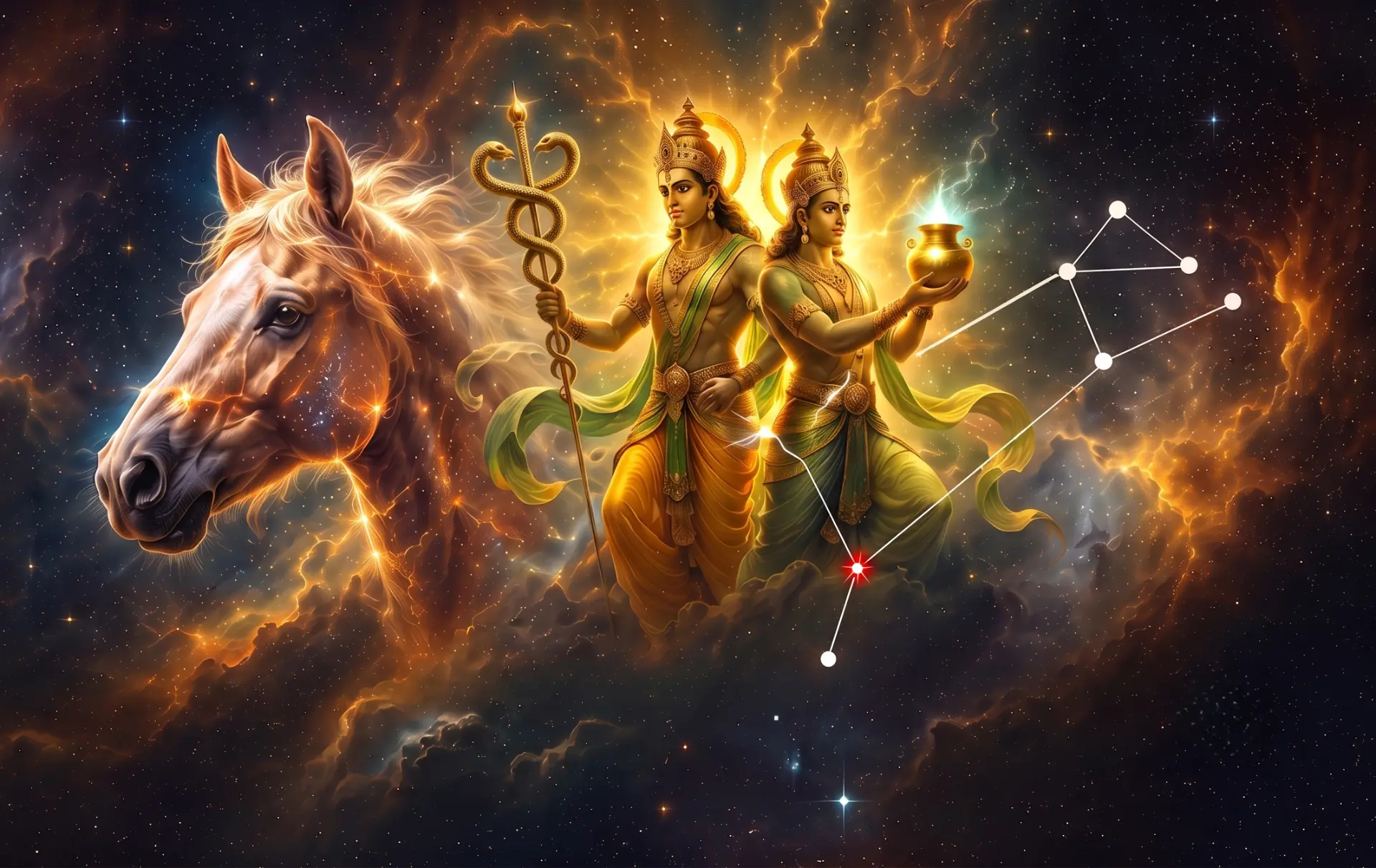
Swati Nakshatra
The Independent Wind
The independent — free as wind, balanced, and self-made. Swati spans 6°40′ – 20°00′ Libra, carries the emblem of the young sprout in the wind, and delivers its results through Rahu.
Overview
The presiding deity of Swati is Vayu, and the stories told of Vayu are the key to the nakshatra's temperament. Vedic tradition treats each lunar mansion as a resting place of the Moon, and here the Moon halts within the domain of Vayu while Rahu governs the unfolding of results. The young sprout in the wind that marks this asterism is the emblem the ancient seers left behind: a compact image holding the whole myth. Read together, Vayu and the young sprout in the wind describe the independent — free as wind, balanced, and self-made.
Personality Traits
Career & Vocation
Trade, diplomacy, aviation, law, independent business.
Career Paths
Relationships & Compatibility
Values freedom; thrives with equally autonomous partners.
Compatibility
Health
Swati natives carry the vitality of Rahu through the Libra portion of the zodiac, so the body responds quickly to both effort and neglect. Constitutionally the Air element dominates, which means rhythm matters more than intensity: regular sleep, warm cooked food and steady breath work keep the system balanced. Stress tends to surface first as nervous tension, restless sleep and dryness. Gentle daily practice — rather than occasional extremes — is the classical prescription for this nakshatra.
Spiritual Significance
Vayu teaches that breath connects all life.
Symbolism
The young sprout in the wind is not decorative — it is instructional. It tells the astrologer how energy behaves once it enters this segment of the sky: freedom, balance, movement. Placed in the Libra field and ruled by Rahu, the symbol shows both the gift and the cost of the nakshatra. When planets fall here, their significations take on the shape of this emblem, which is why two people with the same planet can live it out so differently depending on the nakshatra it occupies.
Mythology
The presiding deity of Swati is Vayu, and the stories told of Vayu are the key to the nakshatra's temperament. Vedic tradition treats each lunar mansion as a resting place of the Moon, and here the Moon halts within the domain of Vayu while Rahu governs the unfolding of results. The young sprout in the wind that marks this asterism is the emblem the ancient seers left behind: a compact image holding the whole myth. Read together, Vayu and the young sprout in the wind describe the independent — free as wind, balanced, and self-made.
The Four Padas
Expresses Swati's young sprout in the wind through a Sagittarius navamsa — fire in temperament.
Expresses Swati's young sprout in the wind through a Capricorn navamsa — earth in temperament.
Expresses Swati's young sprout in the wind through a Aquarius navamsa — air in temperament.
Expresses Swati's young sprout in the wind through a Pisces navamsa — water in temperament.
Remedies
- ·Pranayama practice
- ·Donate to travelers
- ·Chant Vayu mantras
Frequently Asked Questions
What does Swati nakshatra mean?
Swati is the 15th of the 27 nakshatras, spanning 6°40′ – 20°00′ Libra. Its symbol is the young sprout in the wind, its deity is Vayu, and it is ruled by Rahu. In short: The independent — free as wind, balanced, and self-made.
Which planet rules Swati nakshatra?
Rahu rules Swati. Any planet placed in this nakshatra passes its results through Rahu, so the condition of Rahu in the chart matters as much as the planet itself.
What careers suit Swati natives?
Technology & innovation, Foreign trade, Media and allied fields tend to suit Swati natives, especially where freedom, balance, movement are an advantage.
What are the best remedies for Swati?
Pranayama practice; Donate to travelers; Chant Vayu mantras.
Related Nakshatras
Study one nakshatra a week
Get a slow, careful reading of each lunar mansion in your inbox.